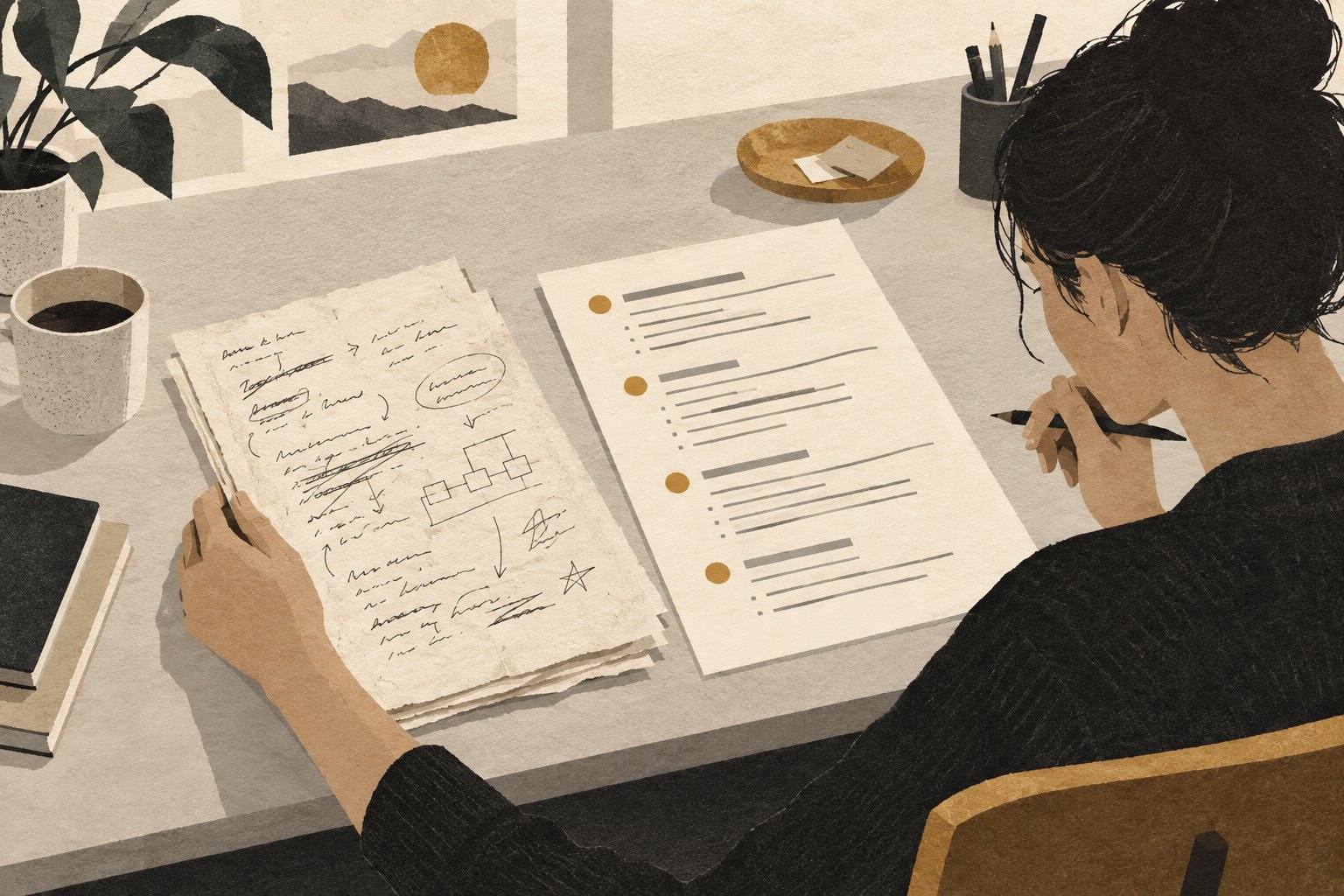
An illustrative scene: compare the organized result with source notes you already understand.
THE SIGNAL BRIEF / A CAREFUL FIRST USE
The first mistake isn’t refusing to use AI. It’s giving it a job you
cannot safely check. “We need to start using AI.” Maybe it came up in a meeting. Maybe it appeared in your goals for the year. Either way, the instruction arrives without the part that would make it useful: use it to do what, with which work, and who answers when the result is wrong? If your reaction is somewhere between curiosity and quiet dread, you do not need a verdict on AI before you try one task. You need to decide what job—if any—you are willing to give it.
FIVE RUNGS / 01—03
FIVE RUNGS / 04—05
For consequential financial, legal, health, or employment decisions, use AI to help identify questions; it does not replace the person accountable for answering them.
Source and scope. Adapted from Don Long’s supplied article, “They Told You to Use AI. Start Here.” The ladder and examples are author guidance, not a validated safety framework. Check workplace policy and tool terms; this issue does not verify or endorse any provider’s data practices. The prompt is an editorial adaptation, not a guarantee of safe or accurate output. Editorial status: Draft for author review. Publication date and byline are proposed; confirm both before sending.